Climate Fiction (Cli-Fi): Landscapes, Issues, and Personal Narratives
Team: Natalia Sanchez, Liliana Bounegru, Maya Livio, Federica Bardelli, Tommaso Renzini, Allison Guy, Bernhard Rieder, Emile den Tex.Overview
This project explores cli-fifiction about climate changein order to understand and categorize fictional scenarios about the future, and the role of human actors in those scenarios. This project uses digital methods to gather data from Amazon and Google Books, in conjuction with manual classification, in order to understand the current zeitgeist of climate change in fiction.Mainstream discourse suggests that the cli-fi genre aims to humanize the apocalyptic scenarios associated with climate change, and make relatable their potential outcomes:
Most of the authors seek, at least in part, to warn, translating graphs and scientific jargon into experience and emotion...The novels discussed here do something valuable, too. They refashion myths for our age, appropriating time-honored narratives to accord with our knowledge and our fears. Climate change is unprecedented and extraordinary, forcing us to rethink our place in the world. (Dissent Magazine) We chose to investigate these two claims: What kind of scenarios does climate fiction depict? What kind of personal, aesthetic, and emotional experiences does cli-fi it putting forward, and what 'myths' does it is refashion?Our correspondance with Dan Bloom, who claims he both did and did not coin the terms 'cli-fi':
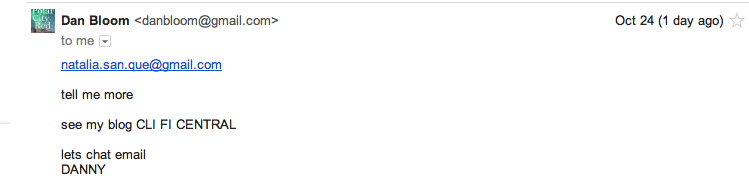
Climate activist Dan Bloom claims to have coined the term cli-fi in 2007, in order to describe and market a dystopian novel about polar cities in Alaska. The term is short for climate fiction, and Bloom argues that the media did not pick up on the term until 2013, when both NPR and The Christian Science Monitor ran major stories about cli-fi as a new literary term. With the sites receiving massive Twitter responses, as Bloom describes, the cli-fi term took off in the blogosphere and the Web more generally (Bloom 2013a). It appears that Bloom follows cli-fi quite closely, as he contacted us on 24 October letting us know that he saw our project wiki and wanted to chat with us about it. In his correspondance, he also shared with us a recent interview he was the subject of in The Guardian. In it Bloom softens his claims: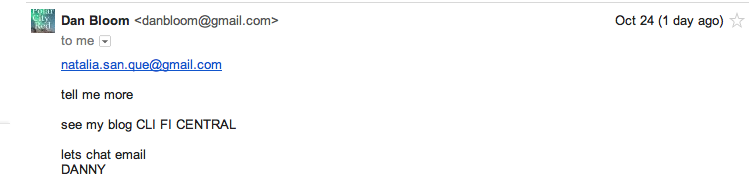


Layer I. Capturing Scenarios
Objective:
Capture and describe the scenarios depicted in cli-fi books.Methodology:
- Create a list of cli-fi books using Amazon suggestions as well as other lists.
- Manually collect the plot summary for each book using the blurbs included in Amazon and Wikipedia entries.
- Read both blurbs and Wikipedia entries and answer the question: What brought us here (type of disaster)?
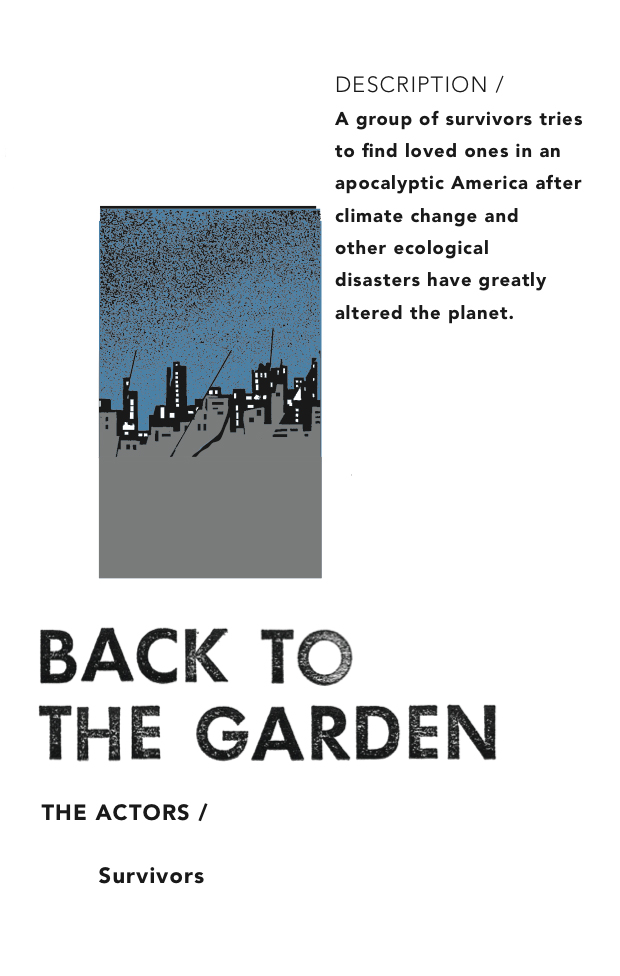
- Read both blurbs and Wikipedia entries and answer the question: What are the scenarios now: who, when, where, what? who are the protagonists/actors? What are the places? When is the action set? What are the issues
- Capture keywords and place them in a spreadsheet.
Expected Findings:
- Each book's cover is being vizualized in terms of their scenario and associated issues. The outcome will be an 'atlas' of cli-fi places in terms of their scenarios.
- A second stage involves a 'collective' analysis of the cli-fi book blurbs. An experiment will be run in RapidMinder text analyzer.
Findings:
What do the scenarios in these books look like?
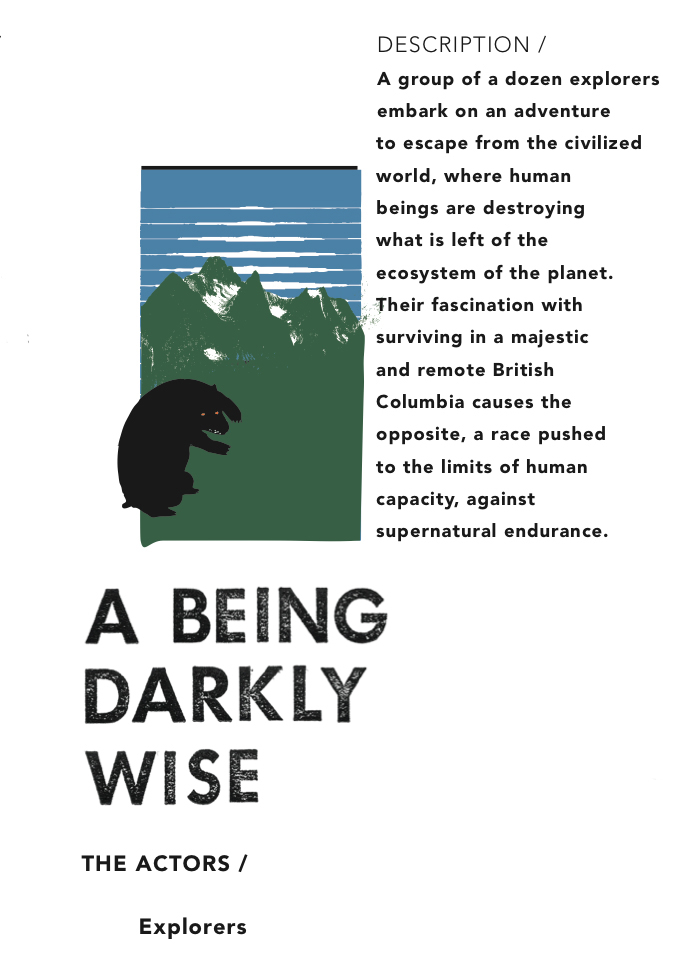
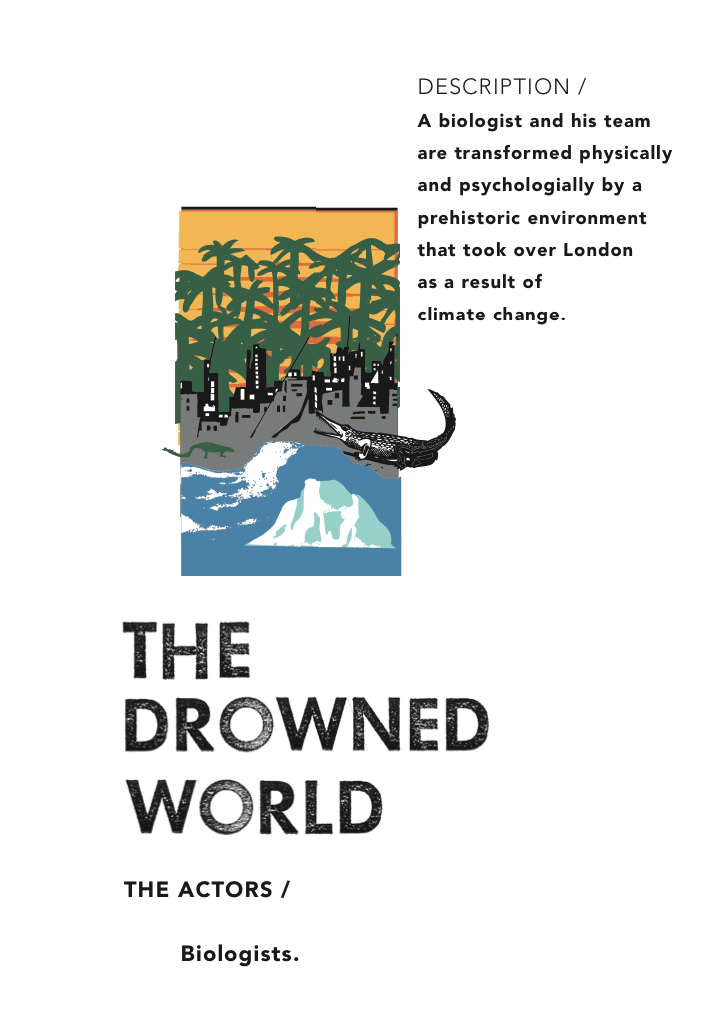
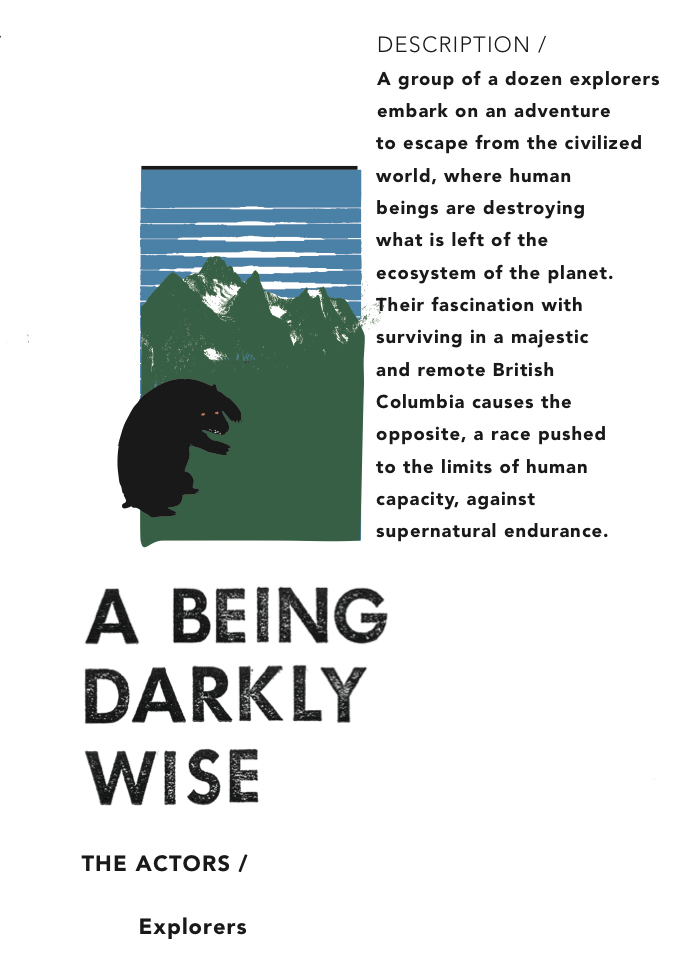
A comprehensive look at the book's scenarios is here. Scenario examples: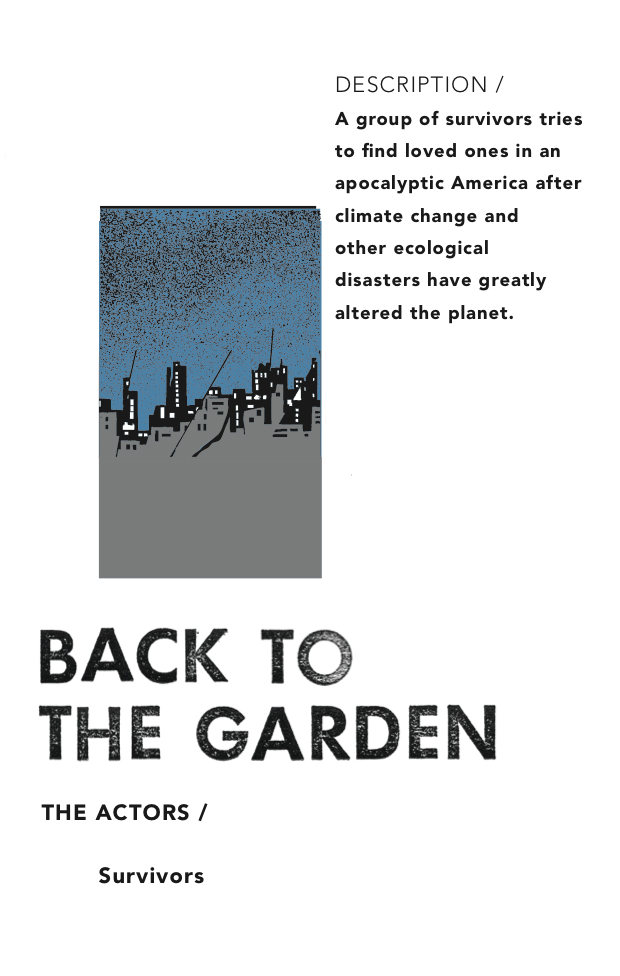
What are the issues in these books?
-
Scarcity of food, fuel and shelter.
-
Lack of clean water, horrible sanitary conditions.
-
Virus affecting crops and detrimental effects of pesticides on the environment.
-
Virulent genetic pandemic and bio-engineered plagues.
-
Cancellation of food export
-
Calories become currency.
-
Evolution of animals, giant iguanas, albino alligators, and endless swarms of malarial insects.
-
Captive breeding program fails, lions go extinct
-
A biomedical engineered creatures.
-
Eco-terrorists, Middle East war, global war, conflict over resources, social unrest, resource wars.
-
Refugees and survivors adjusting to life as post-modern savages.
-
Failed states, no central governments
-
Religion, faith and Christian fundamentalism,
-
Supernatural
-
A final catastrophe
-
Rising sea levels have been grossly underestimated.
-
America opts to abandon multilateral negotiations in the Kyoto 4 summit and resumes secret bilateral negotiations with the Chinese
-
Artificial photosynthesis, solar energy
-
Floods, drought
-
Displacement, migration, survival in a post apocalyptic landscape.
-
State-sponsored executions
-
Eugenics
-
Information overload
-
Universal deluge.
-
Fanaticism
-
Earth population shrinks to less than half a million due to sterility.
-
Ecological collapse, natural disasters
-
Overpopulation increases environmental problems

Layer II. Contextualizing Using Amazon Blurbs
Methodology:
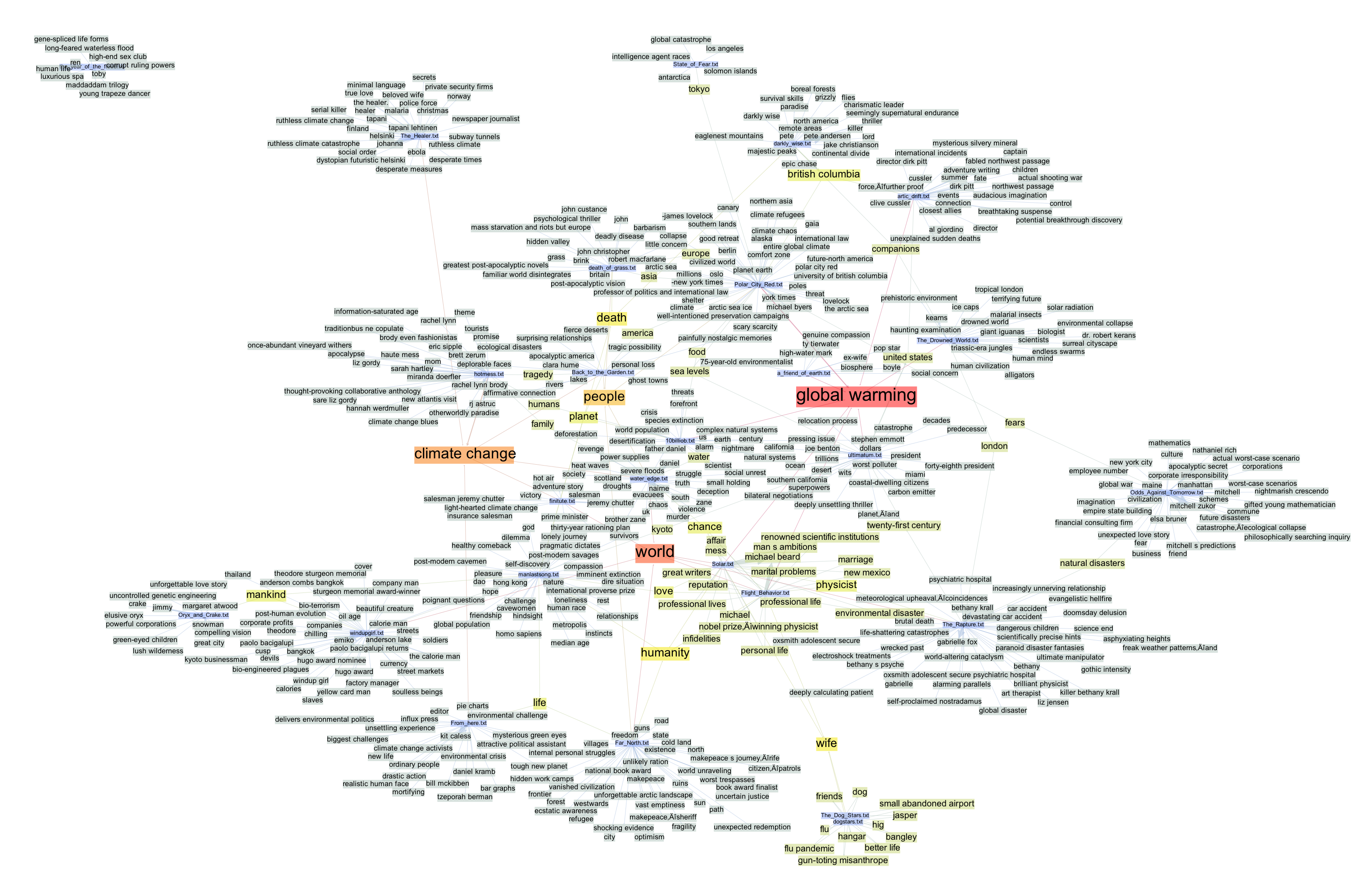
First, we manually captured the blurbs of the top selling 28 climate fiction books using Amazon. In parallel, a new tool was developed to extract blurbs and publication dates of books in Amazon, which enables the automation of this data collection step in future projects. Next, the blurbs corresponding to each book were saved as separate .txt documents and uploaded to the Sciences Po tool ANTA (Actor-Network Analyzer). ANTA is a text analysis tool that extracts expressions contained in a set of medium-sized texts and draws a network of the occurrence of such expressions in the texts. Through the Alchemy API, an online service that provides n-grams extraction, ANTA extracted the relevant entities or expressions from these documents and automatically categorised a selection of them. The rest were manually classified into categories such as: persons, animals, places, etc. Once the categorization was completed, a .gefx file was exported from ANTA and imported into Gephi, a network graphing tool. The result is the visualisation below, which shows the network of books and the relations between them based on the extracted entities.Findings:
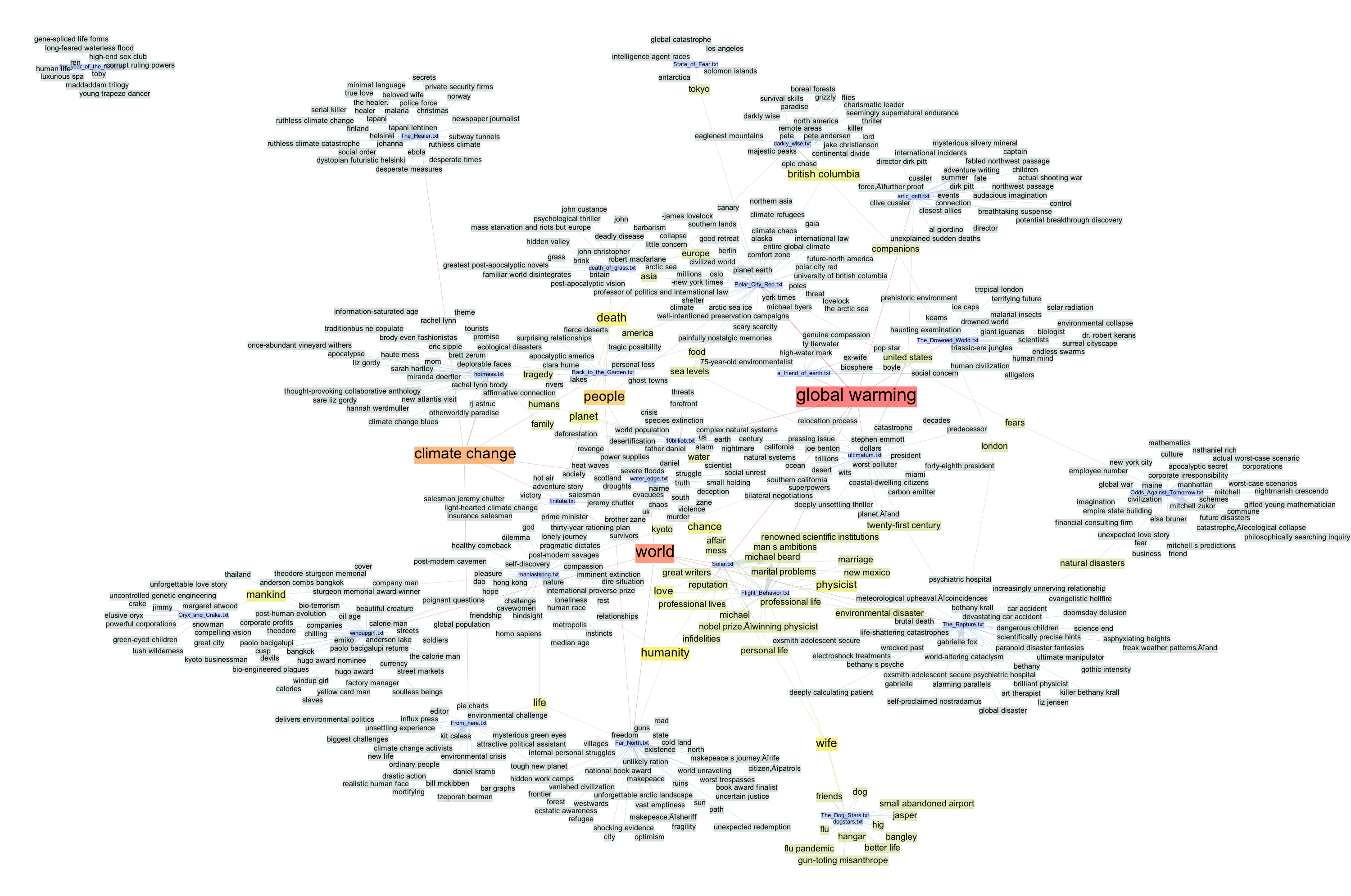 One of the things that the network graph shows are the most common expressions used in the corpus of books, therefore making visible some of the common themes in our set of cli-fi books. The themes that are most shared among our set of books, are, predictably, climate change and global warming. While some critics assert that climate change has become more of a backdrop than a central actor in cli-fi, our network graph reveals that, at least in blurbs, climate change remains a central issue. The prominence of the theme however might be a reflection of the norms of the marketing genre than the actual treatment of climate change in the books.
Words that indicate the global scale of the climate disasters that the books deal with, such as mankind and humanity, occur frequently in the blurbs also.
The geographic terms most mentioned in the blurbs are: Asia, Europe, Tokyo, the United States, the United Kingdom, and British Columbia. Surprisingly, countries and cities in the developing world do not make an appearance in the blurbs, even though these places are predicted to be the hardest-hit by climate change. (The presence of British Columbia in the graph likely reflects the authors home locations.)
In terms of specific climate change-related issues, food, disaster and sea levels appear more than once. Issues such as heat or temperature do not appear in our graph, perhaps revealing that authors may choose to focus more on highly visible or dramatic disasters, such as flood and food shortages.
Words that refer to human relationships are amongst most common in our graph: wife, companions, family, and people. This fact likely reflects the authors desire to put a human face on climate change, and is perhaps a reflection of the fact that environmental disaster has now become an everyday reality. The occurence of the words fears and death confirm the hypothesis that many of these books deal with apocalyptic, dystopian or otherwise dark scenarios.
One of the things that the network graph shows are the most common expressions used in the corpus of books, therefore making visible some of the common themes in our set of cli-fi books. The themes that are most shared among our set of books, are, predictably, climate change and global warming. While some critics assert that climate change has become more of a backdrop than a central actor in cli-fi, our network graph reveals that, at least in blurbs, climate change remains a central issue. The prominence of the theme however might be a reflection of the norms of the marketing genre than the actual treatment of climate change in the books.
Words that indicate the global scale of the climate disasters that the books deal with, such as mankind and humanity, occur frequently in the blurbs also.
The geographic terms most mentioned in the blurbs are: Asia, Europe, Tokyo, the United States, the United Kingdom, and British Columbia. Surprisingly, countries and cities in the developing world do not make an appearance in the blurbs, even though these places are predicted to be the hardest-hit by climate change. (The presence of British Columbia in the graph likely reflects the authors home locations.)
In terms of specific climate change-related issues, food, disaster and sea levels appear more than once. Issues such as heat or temperature do not appear in our graph, perhaps revealing that authors may choose to focus more on highly visible or dramatic disasters, such as flood and food shortages.
Words that refer to human relationships are amongst most common in our graph: wife, companions, family, and people. This fact likely reflects the authors desire to put a human face on climate change, and is perhaps a reflection of the fact that environmental disaster has now become an everyday reality. The occurence of the words fears and death confirm the hypothesis that many of these books deal with apocalyptic, dystopian or otherwise dark scenarios.
Layer III. Additional Methods of Addressing the Personal Side of Climate Change
Methodology:
- We queried Google books and Amazon previews for the terms [memory], [remember], [nostalgia], [remembering] in each of the cli-fi books. Specific passages were captured with the objective of gaining insights on how these climate catastrophes and the world before them are remembered.
- The passages were put in a keyword cloud generator to determine which places and events belong to the fictional imaginaries.
Findings:
Examples of what characters remember in fictional climate futures:
-
When flowers, plants and trees were abundant.
-
The smell of damp earth.
-
Cities that are now gone and that were once beautiful (Paris, New York, Berlin).
-
These cities are referred to as sinking civilizations.
-
The structures that are no longer visible: the doorsteps of houses and porches.
-
Animals that are now extinct, such as elephants, buffalo and rhinos.
-
Nature documentaries and travel journals will help people remember.
-
The time when fuel was easily available will be talked about as an golden age.
-
Only old people will remember how the world was before the climate changed.
-
On occasion younger people will have trouble not feeling indifferent towards the current state of the world, as they never knew it before.
- Common words to talk about the past include: vanished, abandoned, erased, drowned, despair, panic, dissolved, spectacle, absence.
Suggested Layer IV. Classifying Books in Order to Train an Analytical Model
- Using the information captured about each book's scenarios, perfom a manual classification of the books acording to their themes (e.g. apocalyptic vs dystopian).
- This manual classification could potentially be implemented into an analytical model and applied to other texts. For example, do cli-fi themes and vocabularies resonate in other types of media? Does the news increaseingly sounding like fiction?
Conclusions:
-
When clustering the blurbs of climate fiction books global warming and climate change were central and seemed to be drivers of the narrative. This puts into question the statement about the normalization of climate change and it being backgrounded on the narratives.
-
The books appear to share not the details of how these future scenarios look like, but were closer in terms of the personal narratives they introduced. A further step would be to identify and classify in terms of the archetypes of this narratives using a framework (journey back home, searching for the lost land).
-
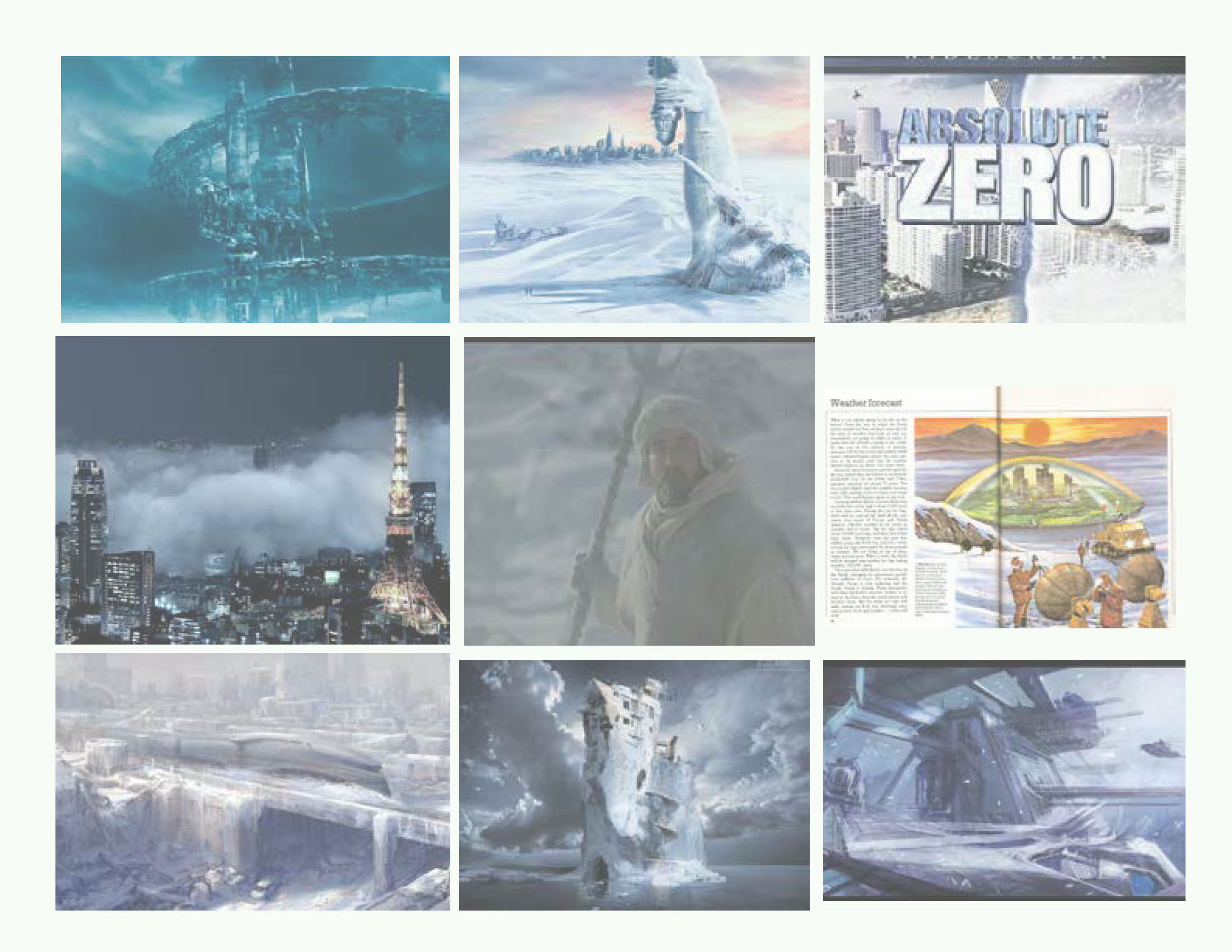
In terms of the scenarios depicted they were common themes: global warming, destroyed cities and flood.
- When exploring what characters in the book ten to remember included: cities, easier times when fuel was available and the everyday geography that is in their present times gone.
Future Research:
How do these novels aestheticize post climate-change landscapes? Does "ugly" nature become beautiful? CLIFIBOOKS: http://clifibooks.com CLI FI CENTRAL blog: http://pcillu101.blogspot.com -- NataliaSanchez - 23 Oct 2013

| I | Attachment | Action | Size | Date | Who | Comment |
|---|---|---|---|---|---|---|
 jpg jpg |
2.jpg | manage | 220 K | 25 Oct 2013 - 14:52 | MayaLivio | |
 svg svg |
2013-10-24_153A243A39.svg | manage | 4 K | 24 Oct 2013 - 13:26 | NataliaSanchez | |
 png png |
3.png | manage | 156 K | 25 Oct 2013 - 14:51 | MayaLivio | |
| jpg |
4.jpg | manage | 215 K | 25 Oct 2013 - 14:53 | MayaLivio | |
 pdf pdf |
CLI20FI20BOOKS.pdf | manage | 2 MB | 23 Oct 2013 - 14:09 | NataliaSanchez | |
| pdf |
CLI_FI_BOOKS_LOW.pdf | manage | 7 MB | 25 Oct 2013 - 14:25 | MayaLivio | |
| jpg |
Pages_from__cli-fi.jpg | manage | 328 K | 11 Dec 2013 - 14:11 | NataliaSanchez | |
| png |
Screen_Shot_2013-10-25_at_10.11.55_AM.png | manage | 19 K | 25 Oct 2013 - 08:20 | NataliaSanchez | |
| png |
Screen_Shot_2013-10-25_at_10.12.18_AM.png | manage | 25 K | 25 Oct 2013 - 08:19 | NataliaSanchez | |
| png |
Screen_Shot_2013-10-25_at_10.12.37_AM.png | manage | 28 K | 25 Oct 2013 - 08:21 | NataliaSanchez | |
| png |
cli_fi_bernhard.png | manage | 1 MB | 25 Oct 2013 - 12:24 | NataliaSanchez |












 Copyright © by the contributing authors. All material on this collaboration platform is the property of the contributing authors.
 Ideas, requests, problems regarding Foswiki? Send feedback